


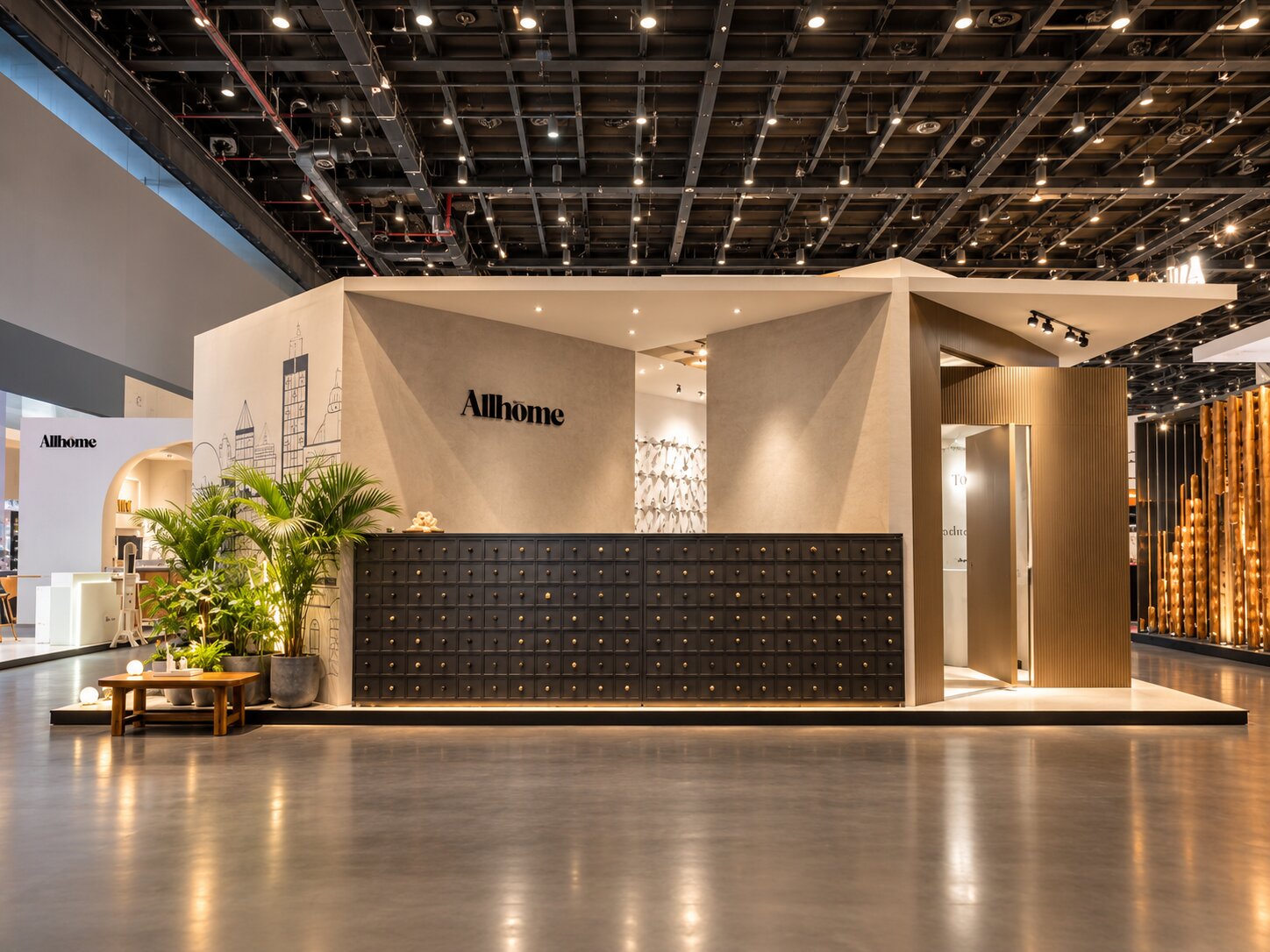
Most exhibitors book their stall the moment the organiser’s floor plan arrives — and only then call a designer. By that point, half of the decisions that determine how the booth will perform have already been made. Here are the five we wish every client would talk to us about before signing the space contract.
1. Location Beats Size
A 36 sqm stall on the main aisle near the entrance will out-perform a 72 sqm stall tucked behind a pillar in the last hall. Look at the visitor flow: where do people enter, where are the food courts, the conference rooms, the anchor exhibitors? Those are the routes that carry footfall past your front edge.
2. Count The Open Sides
A stall’s “open sides” are the edges that face an aisle. One open side (an inline stall) gives you a single, wall-like face. Two (a corner) doubles your visibility. Three (a peninsula) or four (an island) let the design breathe from every direction — but they also cost more to build because there are no neighbour walls to lean on.
“The best-looking render in the world doesn’t help if the only open side faces a service corridor. Send us the floor plan before you sign — it takes us ten minutes to tell you which plot to take.”— Nishant Shah, Founder & Director
3. Check Height & Rigging Rules
Every venue has a maximum build height, and many charge extra above 2.5 m or 4 m. Some halls allow ceiling rigging for lights and signage, some do not. A hanging banner visible across the hall is often the cheapest square metre of branding you can buy — if the venue permits it.
- Maximum build height and set-back rules for neighbours
- Rigging permission and point load limits
- Double-decker approval and structural certification
- Floor loading if you plan to bring heavy machinery
4. Order Power & Water Early
Power is ordered through the organiser, not the stall builder, and late orders are expensive. Estimate your load generously — LED walls, task lighting, coffee machines and demo equipment add up quickly. If your concept includes a live kitchen or a water feature, water and drainage points are usually fixed and must be reserved with the plot.
Nishant Shah
Founder & Director of Expo Benchmark Solutions. Over a decade of designing and building exhibition stalls, retail environments and brand events across India and abroad.
Director's Profile